

 Image 1 of 1
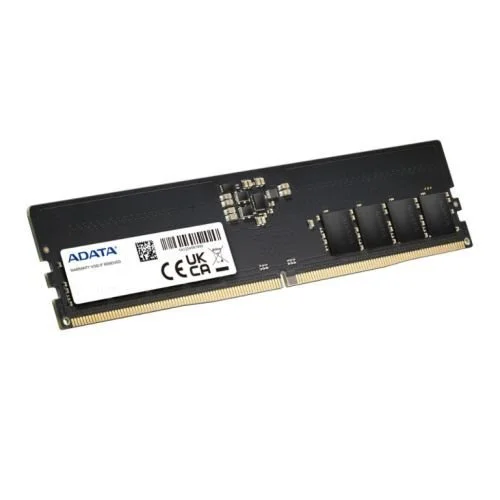
ADATA 32GB 5600MHz PC5-44800 DDR5 CL46
€636.00
Sold Out
Higher Frequencies Built-in Power Management IC Higher Capacities On-Die Error Correcting Code Works with the latest AMD and Intel platforms Higher Frequencies The DDR5-5600 U-DIMM delivers blazing frequencies of up to 5600 MHz, a major leap from the max. frequency of DDR4 modules (3200 MHz). More Energy-Efficient This next-gen memory module operates on just 1.1V, making it 8% more power-efficient than DDR4. What’s more, it features a built-in Power Management IC (PMIC) to enhanced power supply stability. Capacity Doubled This memory module’s architecture allows for more memory bank groups and banks. With the same area, more bank groups can be packed into the module, doubling what was possible with DDR4, giving you higher capacities. Improved Stability With error correcting code (ECC) this module can correct errors automatically in real-time. In addition to greatly reducing the burden of CPU calculations, it also provides increased stability and reliability for enterprise-class computers. QuikTips: DDR5 vs DDR4 – Appearance DDR5 U-DIMM modules have the same dimensions and pin count as DDR4 modules. The most obvious difference is the position of the fool-proof notch. Also, DDR5 integrates I/O resistors with CMD/ADD resistors. Also, the appearance of DDR5 modules are cleaner than DDR4. In addition, you can see a PMIC in the center. QuikTips: DDR5 vs DDR4 – Chip Architecture DDR5 modules provide two times more capacity than DDR4 by packing in more banks and bank groups. In addition, Burst Length, Prefetch are also doubled, increasing the number of data writes and the amount of data taken upfront. And to ensure data integrity, they feature error correcting code (ECC) technology. QuikTips: DDR5 vs DDR4 – Performance The biggest change is that bandwidth and frequency are significantly higher. The ADATA DDR5 memory modules deliver frequencies of up to 4800MHz and feature bandwidth of 38.4GB/s, which is 50% higher than the DDR4-3200. The maximum frequency is increased 1.63 times compared to DDR4. Warranty No LED Lighting – Additional Information See Overview Package Type Retail Package Weight 0.0300 kg Lifetime No #Hide#LED Lighting Heatspreader Series 5600 MHz DDR Type DDR5 Size 2 x 32GB #Hide#Individual Module Size 32GB #Hide#Total Capacity 32GB Total Speed Compliance 46-45-45 PC5-44800 Pins 288-pin CAS Latency CL46 Data Integrity Check ECC Voltage 1.1V Timings Higher Frequencies The DDR5-5600 U-DIMM delivers blazing frequencies of up to 5600 MHz, a major leap from the max. frequency of DDR4 modules (3200 MHz). More Energy-Efficient This next-gen memory module operates on just 1.1V, making it 8% more power-efficient than DDR4. What’s more, it features a built-in Power Management IC (PMIC) to enhanced power supply stability. Capacity Doubled This memory module’s architecture allows for more memory bank groups and banks. With the same area, more bank groups can be packed into the module, doubling what was possible with DDR4, giving you higher capacities. Improved Stability With error correcting code (ECC) this module can correct errors automatically in real-time. In addition to greatly reducing the burden of CPU calculations, it also provides increased stability and reliability for enterprise-class computers. QuikTips: DDR5 vs DDR4 – Appearance DDR5 U-DIMM modules have the same dimensions and pin count as DDR4 modules. The most obvious difference is the position of the fool-proof notch. Also, DDR5 integrates I/O resistors with CMD/ADD resistors. Also, the appearance of DDR5 modules are cleaner than DDR4. In addition, you can see a PMIC in the center. QuikTips: DDR5 vs DDR4 – Chip Architecture DDR5 modules provide two times more capacity than DDR4 by packing in more banks and bank groups. In addition, Burst Length, Prefetch are also doubled, increasing the number of data writes and the amount of data taken upfront. And to ensure data integrity, they feature error correcting code (ECC) technology. QuikTips: DDR5 vs DDR4 – Performance The biggest change is that bandwidth and frequency are significantly higher. The ADATA DDR5 memory modules deliver frequencies of up to 4800MHz and feature bandwidth of 38.4GB/s, which is 50% higher than the DDR4-3200. The maximum frequency is increased 1.63 times compared to DDR4. Higher Frequencies The DDR5-5600 U-DIMM delivers blazing frequencies of up to 5600 MHz, a major leap from the max. frequency of DDR4 modules (3200 MHz). More Energy-Efficient This next-gen memory module operates on just 1.1V, making it 8% more power-efficient than DDR4. What’s more, it features a built-in Power Management IC (PMIC) to enhanced power supply stability. Capacity Doubled This memory module’s architecture allows for more memory bank groups and banks. With the same area, more bank groups can be packed into the module, doubling what was possible with DDR4, giving you higher capacities. Improved Stability With error correcting code (ECC) this module can correct errors automatically in real-time. In addition to greatly reducing the burden of CPU calculations, it also provides increased stability and reliability for enterprise-class computers. QuikTips: DDR5 vs DDR4 – Appearance DDR5 U-DIMM modules have the same dimensions and pin count as DDR4 modules. The most obvious difference is the position of the fool-proof notch. Also, DDR5 integrates I/O resistors with CMD/ADD resistors. Also, the appearance of DDR5 modules are cleaner than DDR4. In addition, you can see a PMIC in the center. QuikTips: DDR5 vs DDR4 – Chip Architecture DDR5 modules provide two times more capacity than DDR4 by packing in more banks and bank groups. In addition, Burst Length, Prefetch are also doubled, increasing the number of data writes and the amount of data taken upfront. And to ensure data integrity, they feature error correcting code (ECC) technology. QuikTips: DDR5 vs DDR4 – Performance The biggest change is that bandwidth and frequency are significantly higher. The ADATA DDR5 memory modules deliver frequencies of up to 4800MHz and feature bandwidth of 38.4GB/s, which is 50% higher than the DDR4-3200. The maximum frequency is increased 1.63 times compared to DDR4.
Higher Frequencies Built-in Power Management IC Higher Capacities On-Die Error Correcting Code Works with the latest AMD and Intel platforms Higher Frequencies The DDR5-5600 U-DIMM delivers blazing frequencies of up to 5600 MHz, a major leap from the max. frequency of DDR4 modules (3200 MHz). More Energy-Efficient This next-gen memory module operates on just 1.1V, making it 8% more power-efficient than DDR4. What’s more, it features a built-in Power Management IC (PMIC) to enhanced power supply stability. Capacity Doubled This memory module’s architecture allows for more memory bank groups and banks. With the same area, more bank groups can be packed into the module, doubling what was possible with DDR4, giving you higher capacities. Improved Stability With error correcting code (ECC) this module can correct errors automatically in real-time. In addition to greatly reducing the burden of CPU calculations, it also provides increased stability and reliability for enterprise-class computers. QuikTips: DDR5 vs DDR4 – Appearance DDR5 U-DIMM modules have the same dimensions and pin count as DDR4 modules. The most obvious difference is the position of the fool-proof notch. Also, DDR5 integrates I/O resistors with CMD/ADD resistors. Also, the appearance of DDR5 modules are cleaner than DDR4. In addition, you can see a PMIC in the center. QuikTips: DDR5 vs DDR4 – Chip Architecture DDR5 modules provide two times more capacity than DDR4 by packing in more banks and bank groups. In addition, Burst Length, Prefetch are also doubled, increasing the number of data writes and the amount of data taken upfront. And to ensure data integrity, they feature error correcting code (ECC) technology. QuikTips: DDR5 vs DDR4 – Performance The biggest change is that bandwidth and frequency are significantly higher. The ADATA DDR5 memory modules deliver frequencies of up to 4800MHz and feature bandwidth of 38.4GB/s, which is 50% higher than the DDR4-3200. The maximum frequency is increased 1.63 times compared to DDR4. Warranty No LED Lighting – Additional Information See Overview Package Type Retail Package Weight 0.0300 kg Lifetime No #Hide#LED Lighting Heatspreader Series 5600 MHz DDR Type DDR5 Size 2 x 32GB #Hide#Individual Module Size 32GB #Hide#Total Capacity 32GB Total Speed Compliance 46-45-45 PC5-44800 Pins 288-pin CAS Latency CL46 Data Integrity Check ECC Voltage 1.1V Timings Higher Frequencies The DDR5-5600 U-DIMM delivers blazing frequencies of up to 5600 MHz, a major leap from the max. frequency of DDR4 modules (3200 MHz). More Energy-Efficient This next-gen memory module operates on just 1.1V, making it 8% more power-efficient than DDR4. What’s more, it features a built-in Power Management IC (PMIC) to enhanced power supply stability. Capacity Doubled This memory module’s architecture allows for more memory bank groups and banks. With the same area, more bank groups can be packed into the module, doubling what was possible with DDR4, giving you higher capacities. Improved Stability With error correcting code (ECC) this module can correct errors automatically in real-time. In addition to greatly reducing the burden of CPU calculations, it also provides increased stability and reliability for enterprise-class computers. QuikTips: DDR5 vs DDR4 – Appearance DDR5 U-DIMM modules have the same dimensions and pin count as DDR4 modules. The most obvious difference is the position of the fool-proof notch. Also, DDR5 integrates I/O resistors with CMD/ADD resistors. Also, the appearance of DDR5 modules are cleaner than DDR4. In addition, you can see a PMIC in the center. QuikTips: DDR5 vs DDR4 – Chip Architecture DDR5 modules provide two times more capacity than DDR4 by packing in more banks and bank groups. In addition, Burst Length, Prefetch are also doubled, increasing the number of data writes and the amount of data taken upfront. And to ensure data integrity, they feature error correcting code (ECC) technology. QuikTips: DDR5 vs DDR4 – Performance The biggest change is that bandwidth and frequency are significantly higher. The ADATA DDR5 memory modules deliver frequencies of up to 4800MHz and feature bandwidth of 38.4GB/s, which is 50% higher than the DDR4-3200. The maximum frequency is increased 1.63 times compared to DDR4. Higher Frequencies The DDR5-5600 U-DIMM delivers blazing frequencies of up to 5600 MHz, a major leap from the max. frequency of DDR4 modules (3200 MHz). More Energy-Efficient This next-gen memory module operates on just 1.1V, making it 8% more power-efficient than DDR4. What’s more, it features a built-in Power Management IC (PMIC) to enhanced power supply stability. Capacity Doubled This memory module’s architecture allows for more memory bank groups and banks. With the same area, more bank groups can be packed into the module, doubling what was possible with DDR4, giving you higher capacities. Improved Stability With error correcting code (ECC) this module can correct errors automatically in real-time. In addition to greatly reducing the burden of CPU calculations, it also provides increased stability and reliability for enterprise-class computers. QuikTips: DDR5 vs DDR4 – Appearance DDR5 U-DIMM modules have the same dimensions and pin count as DDR4 modules. The most obvious difference is the position of the fool-proof notch. Also, DDR5 integrates I/O resistors with CMD/ADD resistors. Also, the appearance of DDR5 modules are cleaner than DDR4. In addition, you can see a PMIC in the center. QuikTips: DDR5 vs DDR4 – Chip Architecture DDR5 modules provide two times more capacity than DDR4 by packing in more banks and bank groups. In addition, Burst Length, Prefetch are also doubled, increasing the number of data writes and the amount of data taken upfront. And to ensure data integrity, they feature error correcting code (ECC) technology. QuikTips: DDR5 vs DDR4 – Performance The biggest change is that bandwidth and frequency are significantly higher. The ADATA DDR5 memory modules deliver frequencies of up to 4800MHz and feature bandwidth of 38.4GB/s, which is 50% higher than the DDR4-3200. The maximum frequency is increased 1.63 times compared to DDR4.